A staircase may look effortless once installed — clean lines, smooth handrails, perfectly fitted treads — but behind that finished result lies a detailed and highly skilled manufacturing process.
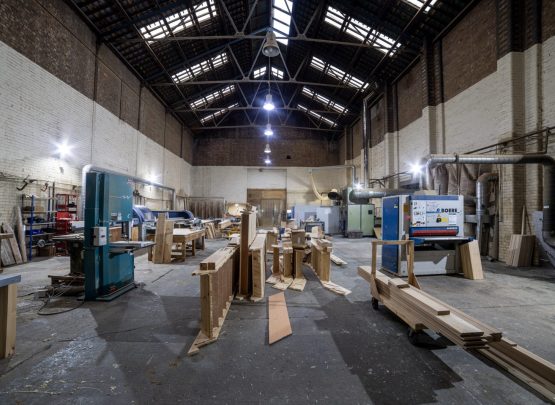
At EH Joinery, every staircase is produced through a combination of traditional craftsmanship and modern in-house CNC precision. Here’s a closer look at what happens before your staircase ever reaches your home.
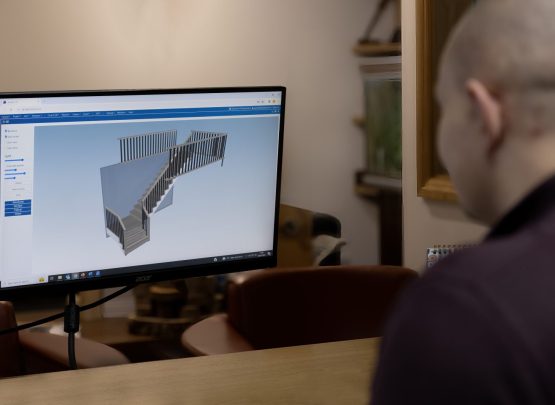
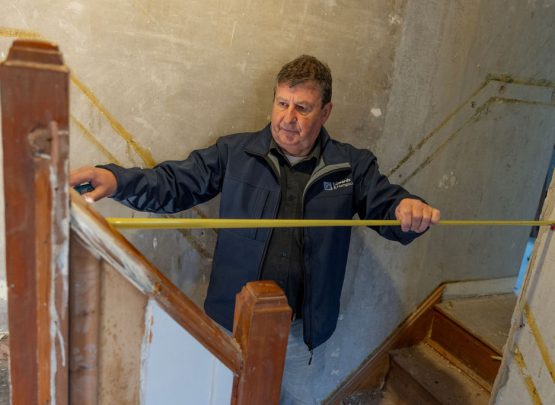
1. Turning Ideas into Working Drawings
Every project begins with accurate measurements and detailed drawings. Proportions, head height, pitch, structural requirements, and building regulations are all carefully considered at this stage.
Using CAD software allows the staircase to be visualised in detail before a single piece of timber is cut. Clients can see how materials, balustrades, and layouts will work within their space, while the workshop team receives precise manufacturing data.
This early planning stage ensures:
- Accurate fit on installation
- Compliance with regulations
- Clear understanding between client, designer, and maker
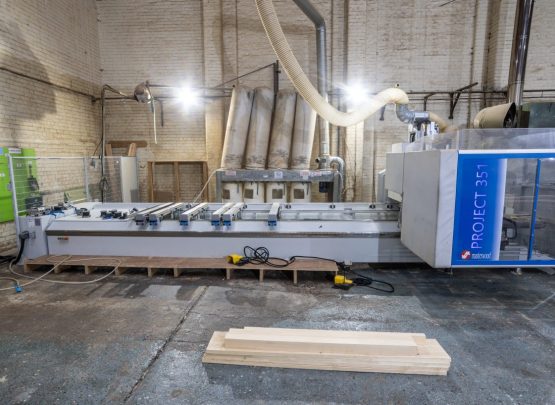
2. Precision Cutting with Our In-House CNC Machine
Once designs are approved, the data moves directly to our in-house CNC machine. CNC (Computer Numerical Control) technology allows us to cut stair strings, treads, risers, and detailed components with exceptional accuracy.
This stage ensures:
- Clean, repeatable precision
- Perfect housing joints and rebates
- Reduced material waste
- Consistent quality across complex designs
Because the CNC machining is carried out in-house, we maintain full control over quality and timing. Adjustments can be made quickly if required, and every component is checked by our team before moving to assembly.
Technology provides the precision — but it is only part of the story.
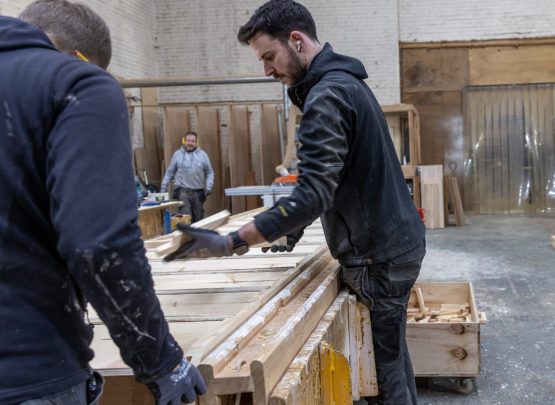
3. Skilled Hand Assembly and Finishing
After machining, experienced joiners assemble the staircase within our workshop. This is where craftsmanship truly comes into its own.
Components are dry-fitted, joints refined, and every detail inspected. Handrails are shaped and sanded, balustrades aligned, and timber surfaces carefully prepared for finishing.
Even with advanced machinery, skilled hands are essential to:
- Ensure tight, seamless joints
- Achieve smooth tactile finishes
- Refine details that machines cannot perfect alone
The balance between precision engineering and traditional joinery knowledge is what creates a staircase that feels solid and built to last.
4. Preparing for a Seamless Installation
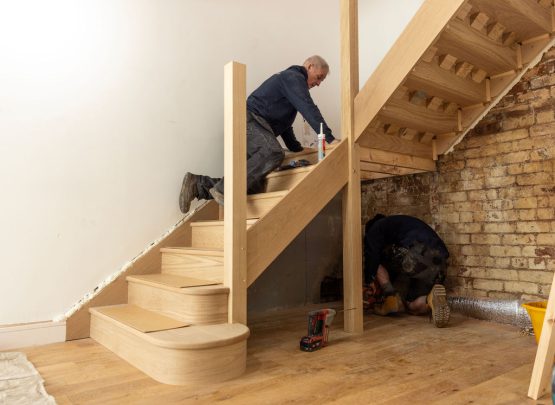
Before leaving the workshop, each staircase is prepared for efficient installation. Components are clearly labelled, protected, and transported with care.
Because much of the detailed work is completed in-house, on-site installation is typically smoother and more controlled. The staircase is assembled precisely as planned, minimising disruption while ensuring a perfect fit.
The result is a feature that not only looks impressive but performs structurally and aesthetically for decades.
Craftsmanship You Don’t See — But Feel Every Day
A staircase is something you use countless times a day. Its strength, balance, and finish are felt long after the dust of installation has settled.
By combining in-house CNC precision with experienced joinery craftsmanship, we ensure every staircase is made with care from the first drawing to the final fitting — delivering both technical accuracy and timeless quality.